


Three deals worth a combined $17 billion are reshaping who manages founder wealth. Private credit secondaries doubled to $20 billion last year, creating a liquidity layer in a market that barely existed three years ago. JP Morgan's latest family office report confirms what many of us suspected: 86% of single family offices still don't have a succession plan.
Five stories this week. One thread connecting them: the infrastructure behind your capital is being rebuilt, and most founders aren't paying attention.
This Week in 30 Seconds
- Three wealth management deals totalling $17 billion: Nuveen is buying Schroders for $13.5 billion. NatWest is acquiring Evelyn Partners for £2.7 billion — the largest PE-backed wealth management exit in UK history. If you use either platform, your counterparty relationship is shifting
- Private credit secondaries doubled to $20 billion: GP-led credit continuation funds jumped over 200%. Tikehau Capital closed a $1 billion private debt secondaries fund above target. Credit portfolios are generating their own liquidity events now
- Sector-specific secondary firms launching: Blue Dot Investors emerged from stealth focused on fintech. Just 15 companies account for over 70% of all venture secondary volume. Hundreds of mature companies sit outside that window with no practical liquidity path
- 86% of family offices lack succession plans: JP Morgan's 2026 report surveyed 333 family offices averaging $1.6 billion in net worth. 65% want AI exposure but 57% have no growth equity allocation. The gap between ambition and architecture is wide
Credit Secondaries Just Became a Liquidity Story
Private credit has been pitched to post-exit founders as the stable, yield-generating alternative to bonds for the past three years. For many, it delivered. But the plumbing underneath those allocations has shifted in ways most wealth managers aren't flagging.
Institutional Investor reported that private credit secondary transactions hit $20 billion last year — nearly double the prior year — according to new Evercore analysis. Still a fraction of the $1.9 trillion private credit market. But the growth rate matters more than the absolute number.
The mechanics are straightforward. Private credit loans get repaid when the underlying company exits. When those exits don't happen, loans get extended, holding periods stretch, distributions slow. Investors who expected liquidity find themselves locked in. Evercore's Michael Addeo put it directly: slower exits mean lower distributions, which push investors toward secondary sales.
GP-led credit secondaries are accelerating fastest. Continuation fund structures totalled $12 billion last year — more than triple the year before. Fund managers are using them to recycle capital without waiting for portfolio run-off.
Tikehau Capital's timing says a lot about the momentum. The firm closed its second private debt secondaries fund on February 17 with over $1 billion in commitments, beating its $750 million target and more than doubling its first vintage.
Last week we covered private credit yield compression — direct lending returns dipping below 10% for the first time in three years. This week's story is the downstream consequence. Yields compress. Distributions slow. The secondary market becomes the pressure valve.
If you hold private credit allocations post-exit, two questions for your fund manager:
- What's the expected distribution timeline given current exit activity?
- Have they explored GP-led continuation structures?
The answers tell you whether your allocation has a natural exit — or whether you're locked in until deal markets reopen.
The Long Tail of Secondaries Is Opening Up
Zoom out from credit, and the venture secondary market tells a parallel story.
Global secondary transaction volume reached roughly $160 billion in 2024. Jefferies projected volumes above $210 billion for 2025 — a 30% jump. The market keeps growing, but what changed in the past twelve months is more interesting than the headline number.
Sector-specific secondary capital showed up.
In earlier cycles, secondaries were generalist plays. Large funds buying LP stakes at a discount. Companies running the occasional tender offer. Now, specialised firms are building practices around vertical expertise — and the concentration data explains why.
Blue Dot Investors emerged from stealth on February 11 with an explicit fintech mandate. Their thesis rests on a striking concentration problem:
- 15 companies account for over 70% of all venture secondary volume
- Within fintech, 10 names represent 95% of activity
- Hundreds of mature, profitable fintech companies have zero practical liquidity pathway
Blue Dot's founding team includes Sahej Suri (formerly QED Investors) and operating partner Aaron Vermut, who co-founded Merlin Securities (acquired by Wells Fargo) and served as CEO of Prosper Marketplace. They're offering operational support alongside capital — IPO preparation, regulatory navigation, growth strategy.
This matters for founders on both sides. Running a private company and employees asking about liquidity? Vertical secondary firms are creating pathways that didn't exist eighteen months ago. Allocating capital post-exit? Sector-specific secondaries offer sharper exposure than broad secondary funds.
One downstream effect worth noting: as more capital pours into secondary strategies, discounts to NAV compress. What averaged 9% has narrowed to roughly 6%. In competitive deals, tighter still. Good news for sellers. For buyers, it means easy returns from discount capture are fading. Underwriting skill becomes what separates winners from the crowd.
Everything here is free. Subscribing just tells me the content is useful — and helps me decide what to write next.
Three Deals. $17 Billion. The Wealth Industry Is Consolidating Around You.
Two deals announced in the past ten days signal something bigger than routine M&A. They show how quickly the landscape of who manages founder capital is being reshaped.
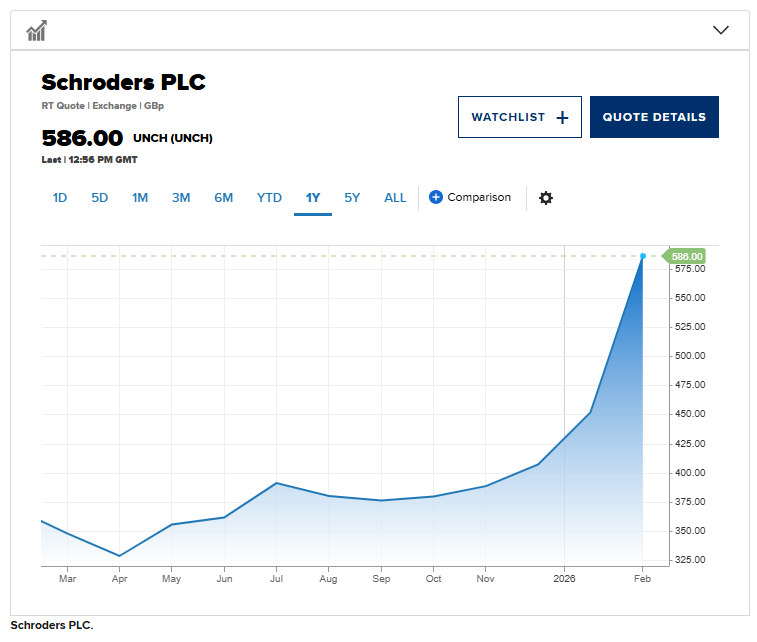
Nuveen buys Schroders for $13.5 billion. On February 12, Nuveen announced it would acquire Schroders for £9.9 billion ($13.5 billion). The combined entity manages nearly $2.5 trillion across 40+ markets, with a $414 billion private markets franchise. Schroders had been independent for 222 years. The Schroder family held 44%. That era is over. Nuveen is paying a 34% premium, and Moody's immediately revised its outlook for both Nuveen and TIAA to negative.
NatWest buys Evelyn Partners for £2.7 billion. Three days earlier, NatWest agreed to acquire Evelyn Partners — the largest PE-backed wealth management exit in UK history. Permira had grown Evelyn from £5 billion in AUM to £69 billion over a decade. Combined with NatWest's private banking arm (including Coutts), the merged platform will manage £127 billion. Bloomberg reported that Barclays had also been circling but walked away.
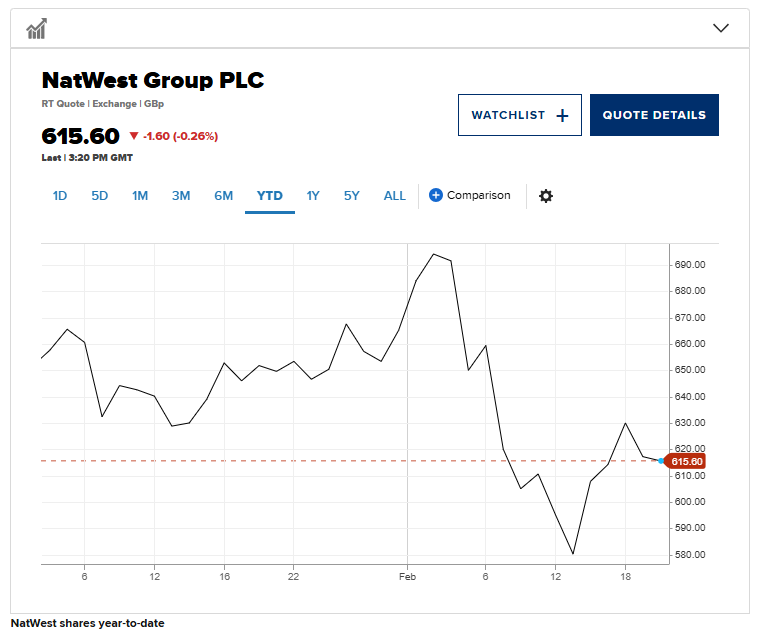
For UK-based founders, the Evelyn deal deserves close attention. Evelyn Partners sits squarely in the high-net-worth segment between ultra-HNW and mass affluent — the $5M to $50M range that most of our readers occupy. If Evelyn manages your wealth, your relationship just shifted from a PE-backed independent to a bank-owned division. Service models, fee structures, and investment approaches tend to change during these integrations. Even when acquirers promise continuity.
Add Schwab's pending $660 million acquisition of Forge Global (closing H1 2026, bringing private market trading to 46 million retail accounts) and the pattern becomes hard to ignore.
Mid-sized firms between $500 billion and $1.5 trillion in AUM face increasingly difficult standalone economics. Scale advantages in distribution, technology, and regulatory compliance are pulling the industry toward fewer, larger platforms.
What does that mean practically?
- Fewer independent managers = fewer distinct investment approaches
- Less negotiating leverage on fees
- Greater concentration risk in who holds and deploys your capital
If your wealth manager was acquired, merged, or reorganised in the past two years, it's worth checking whether the team, strategy, and service level that attracted you originally still exist post-transaction. Don't assume they do.
JP Morgan's Family Office Report: Big Ambition, Thin Architecture
JP Morgan Private Bank released its 2026 Global Family Office Report — 333 single family offices across 30 countries, averaging $1.6 billion in net worth and $1.2 billion in assets under supervision.
The headline finding is a gap between intention and execution. 65% plan to prioritise AI-related investments. But 57% have no current allocation to growth equity or venture capital. 79% have no infrastructure exposure. Those are the three asset classes most directly connected to the AI buildout.
Wanting to invest in AI while holding no growth equity is like wanting to surf without going near the ocean.
The allocation breakdown tells the story:
- 38.4% public equities
- 30.8% private investments (but only 3.3% growth equity/VC, and 0.7% infrastructure)
- 14.8% fixed income
- 7.8% cash
- 4.7% hedge funds
- <3% commodities, art, and crypto combined
Cash is a tension point. A third hold more than 10% in cash — and it was simultaneously the number one allocation they plan to reduce. Capital sitting idle while families talk about deploying into AI.
Governance is the deeper structural issue. 86% lack a clear succession plan for key decision-makers. For family business-owning offices, internal conflict ranks as a top-three risk at nearly double the rate of non-business-owning peers (41% versus 23%). Less than half include their operating company in investment decisions. Think about that: the largest asset many founders hold is disconnected from the rest of their portfolio strategy.
Family Office operating costs scale steeply. Average: $3 million per year. For offices managing over $1 billion, that rises to $6.6 million. External services eat roughly a quarter of total spend, with 80% outsourcing at least some portfolio management.
For founders in the $5M to $100M range, the JP Morgan data is instructive — not because it describes your situation directly, but because it reveals what happens when governance doesn't keep pace with capital complexity. If offices managing a billion dollars haven't cracked succession planning, the odds that a founder with $30M has a tighter framework are slim.
Quick Signal: European Founders Should Be Watching PE Exits
One pattern worth flagging. European VC-backed companies are increasingly exiting through PE buyouts rather than IPOs, with buyout exit value hitting €19 billion.
PE buyout narratives require different preparation than IPO readiness. Governance alignment, clean data rooms, management continuity, EBITDA-focused value stories — these matter more than revenue growth narratives. Founders who build for IPO but exit through PE buyout often lose leverage because their materials and metrics don't match what the buyer actually values.
Maintaining parallel exit readiness across IPO, trade sale, and structured secondary isn't paranoia. It's operational hygiene.
This was Capital Signals — weekly briefings on what's reshaping founder strategy on wealth.
Go deeper: Playbooks · Wealth Architecture · Investment Strategy · Business Building · Life Design
Found this useful? Forward it to a founder who's thinking about this stuff. Got a question or disagree with something? Get in touch.
New here? Subscribe for one email a week.


